


As temperatures in the UAE begin to climb towards 45°C and beyond, your air conditioning system transforms from a convenience into a lifeline. Transitioning from the mild winter months to peak summer requires your HVAC system to handle a massive increase in thermal load.
If an AC unit is not properly prepared for this shift, it will consume significantly more electricity to achieve the same cooling effect. Here is a proactive checklist to ensure your system runs efficiently all summer long.
1. Optimize Your Thermostat Strategy
The way you use your thermostat heavily dictates your system’s efficiency and longevity.
Setting your thermostat to an extremely low temperature (like 18°C) does not cool the room faster. It simply forces the compressor to run continuously without a break. Aim for a comfortable, sustainable 23°C to 24°C. Additionally, ensure your fan is set to “Auto” rather than “On” so the fan rests when the target temperature is reached.
2. Inspect the Outdoor Condenser Unit
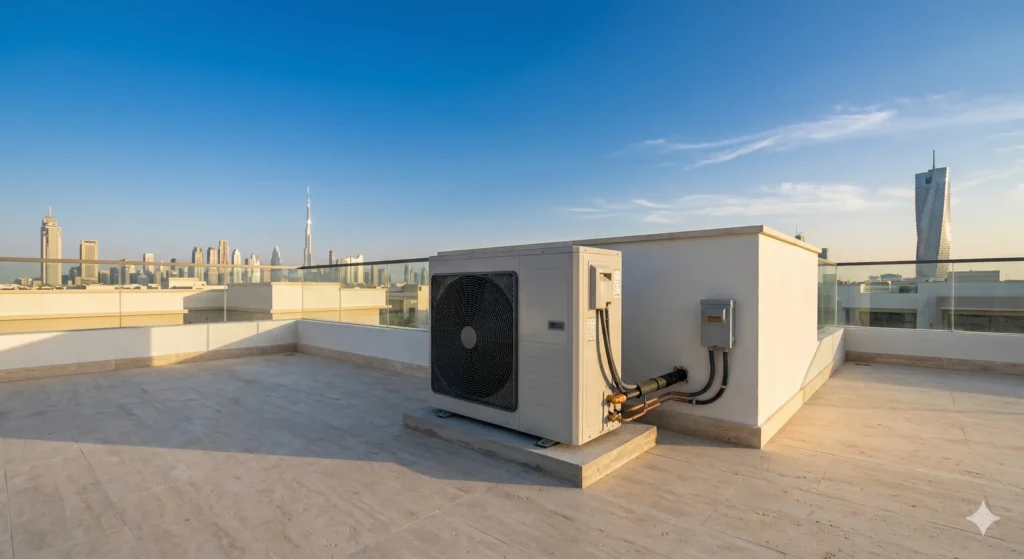
For villa owners, the outdoor unit (condenser) works under the harshest conditions, directly exposed to the UAE sun, sand, and humidity.
Take a walk around your property and inspect the unit. Ensure there is at least two feet of clear space around the condenser. Overgrown garden bushes, stacked outdoor furniture, or heavy debris blocking the side panels will suffocate the unit, preventing it from releasing heat efficiently.
3. Check Your Home’s Insulation and Seals
Your AC can be in perfect condition, but if your home is leaking cold air, efficiency plummets.
Inspect the rubber seals around your external doors and balcony sliders. In Dubai’s extreme heat, these rubber strips often dry out, crack, and peel. Furthermore, heavy curtains or blackout blinds are an excellent defense against solar heat gain during peak afternoon sunlight.
4. Listen for Unusual Noises
Before the severe heat arrives, turn your AC on and listen closely for a few minutes.
A well-functioning system should operate with a steady, low hum. If you hear grinding, high-pitched squealing, or rhythmic clicking, it often indicates a mechanical issue. Addressing these early through comprehensive AC & HVAC services can prevent a complete motor failure.
5. Schedule a Pre-Summer System Audit
While visual inspections are excellent homeowner habits, a true efficiency check requires looking “under the hood.”
A comprehensive audit involves checking the refrigerant levels, inspecting electrical connections, and ensuring drain lines are clear. Relying on professional AC maintenance ensures your system operates at peak efficiency when you need it most.
Final Thoughts on Summer AC Prep
Preparing your air conditioner for the harsh Dubai summer is not just about avoiding a breakdown; it is about efficiency, comfort, and peace of mind. By taking a few simple steps—like optimizing your thermostat, clearing space around the outdoor unit, and keeping an ear out for strange noises—you give your system the best chance to perform smoothly. A well-prepared AC works smarter, not harder, keeping your home perfectly chilled while keeping your energy consumption in check.